Table of Contents
- Introduction: Maximizing Your App Marketing Strategy with Google App Campaigns in 2025
- Step 1: Understanding the Evolution of App Campaigns and Mobile App Campaigns in 2025
- Step 2: Defining Clear, Measurable Objectives for Your App Promotion
- Step 3: Structuring Your Mobile App Campaigns for Optimal Performance and App Downloads
- Step 4: Crafting Compelling Ad Creatives for Google Ads for App Installs and Enhanced User Engagement
- Step 5: Implementing Advanced Targeting Techniques for Mobile App Campaigns in 2025
- Step 6: Mastering Bidding Strategies for Google App Campaigns to Maximize ROI
- Step 7: Tracking and Analyzing Performance of Your App Marketing Strategy for Continuous Improvement
- Tips & Best Practices for App Marketing Strategy with Google App Campaigns in 2025
- Troubleshooting Common Issues with App Campaigns for Seamless Performance
- Conclusion: Achieving App Marketing Success with Google App Campaigns in 2025
- Key Takeaways: Optimizing Google App Campaigns for Success in 2025
- Frequently Asked Questions About Google App Campaigns in 2025
Introduction: Maximizing Your App Marketing Strategy with Google App Campaigns in 2025
Are you looking to elevate your app’s presence in the competitive digital landscape? Google App Campaigns provide an efficient, AI-powered solution for app promotion across Google’s extensive network. As Testing from Digital Shift, I’ve seen firsthand how effective these campaigns can be when implemented correctly. This comprehensive guide explores how to master Google App Campaigns in 2025, offering actionable strategies to boost your app’s visibility, downloads, and user engagement. Whether you’re an experienced marketer or new to app promotion, understanding and leveraging Google App Campaigns is crucial for achieving app marketing success. Learn how to navigate the complexities of app campaigns, optimize your ad creatives, and refine your targeting to connect with the right audience and drive meaningful results for your app in 2025.
Step 1: Understanding the Evolution of App Campaigns and Mobile App Campaigns in 2025
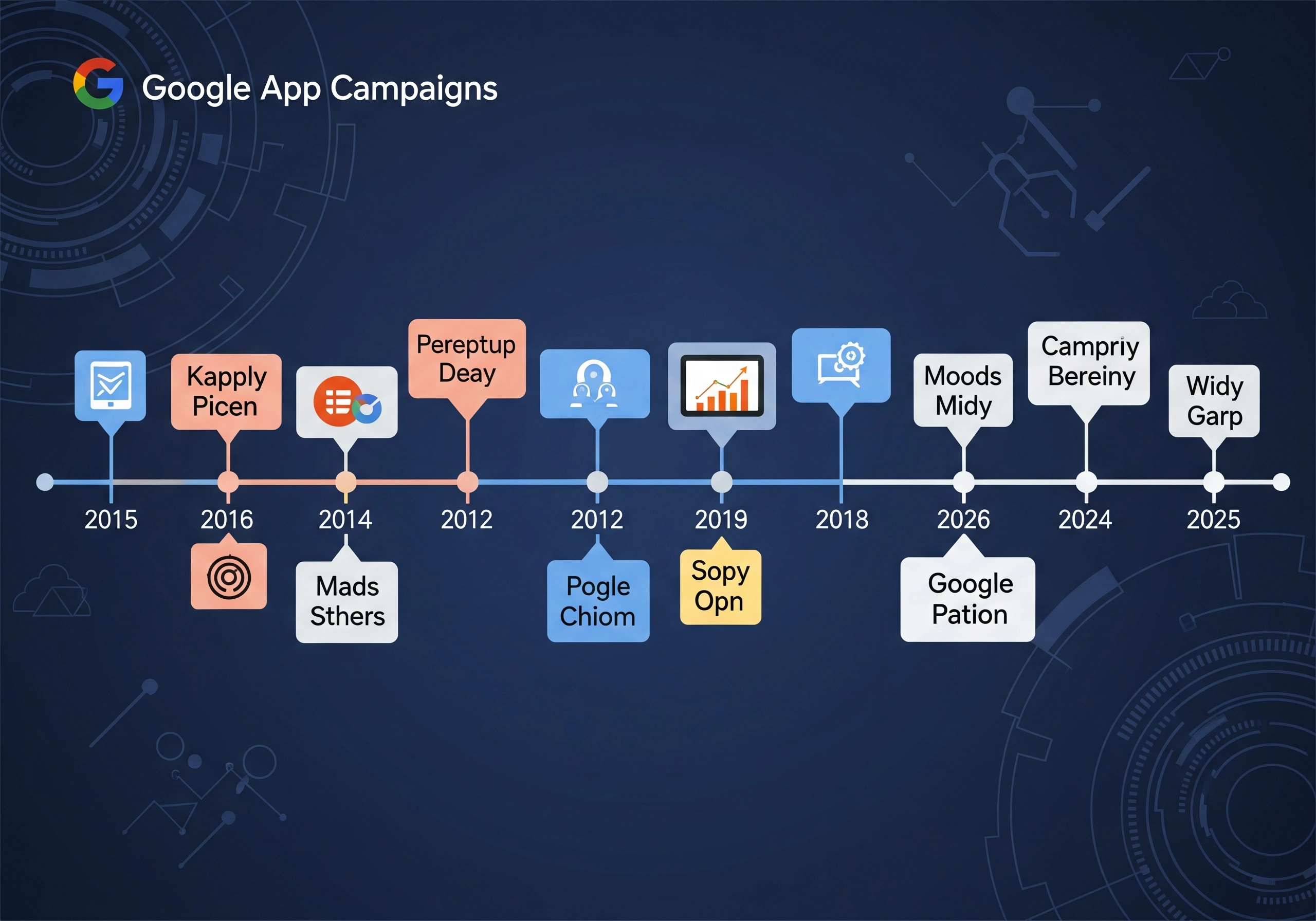
Google App Campaigns have undergone significant transformations, now leveraging AI-driven automation for continuous learning and optimization based on user behavior. The 2025 version includes advanced privacy-centric tracking, enhanced creative formats, and refined attribution models. According to Aniruddha Mishra’s guide, these campaigns simplify ad placements across Google’s Search, Play Store, YouTube, Display, and Discover networks. Formerly known as Universal App Campaigns, Google App Campaigns streamline ad placements across Google’s Search, Play Store, YouTube, Display, and Discover networks. Staying informed about these advancements and adapting your mobile app campaigns is essential for maximizing your campaign’s effectiveness. The shift towards AI-driven automation means that advertisers need to focus more on providing high-quality assets and less on manual adjustments.
Step 2: Defining Clear, Measurable Objectives for Your App Promotion
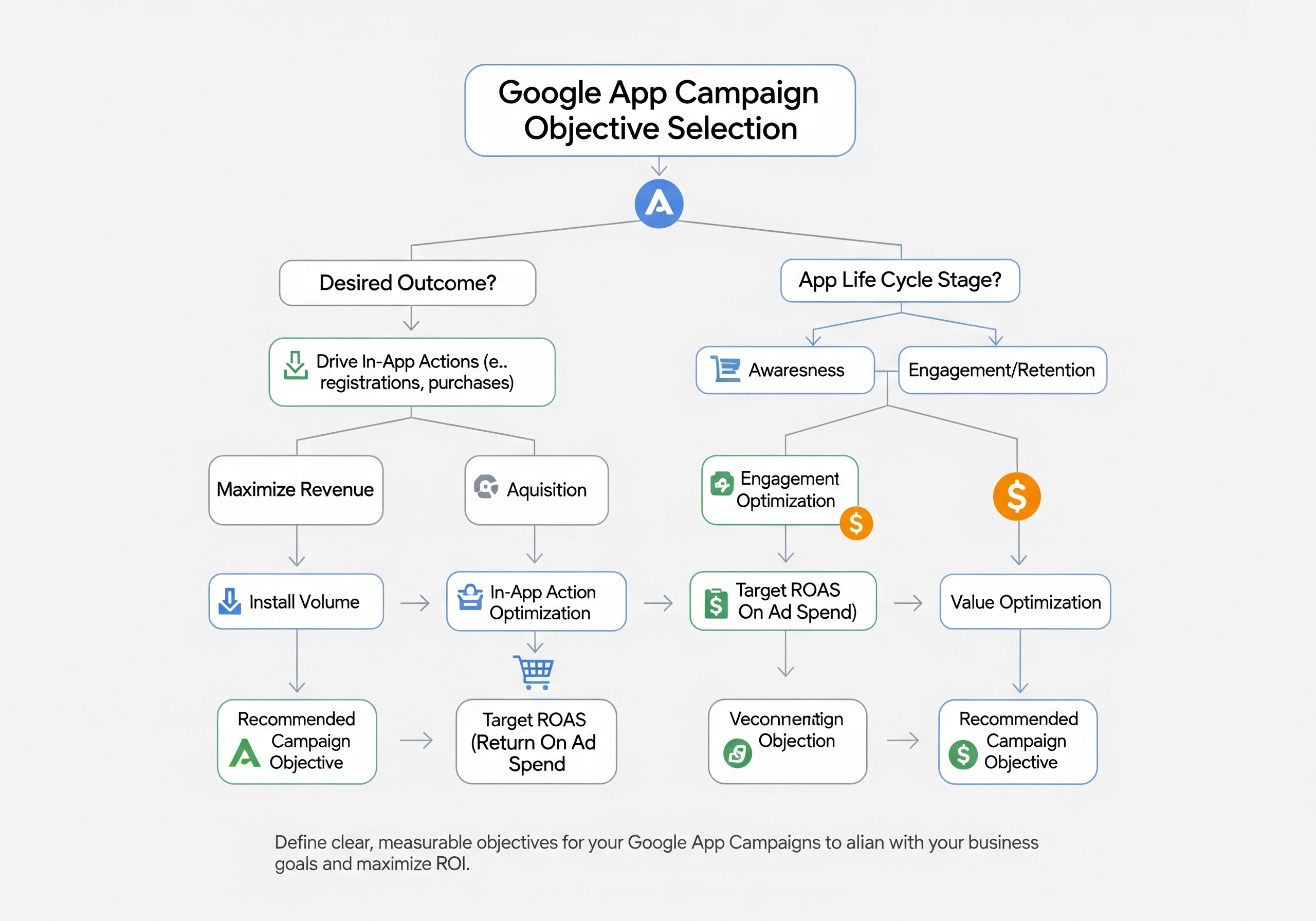
Before launching your Google App Campaigns, clearly define your objectives. Are you aiming to increase app installs, drive specific in-app actions, or boost overall revenue? Google App Campaigns offer various campaign types, each tailored to specific goals. If you’re new to app marketing strategy, start with install campaigns to allow the algorithms to identify high-converting users. Then, test install and action campaigns to determine the optimal cost-per-acquisition (CPA). This strategic approach ensures your campaigns align with your business goals and deliver measurable results. As the team at Digital Shift knows, setting clear objectives is the first step to any successful marketing campaign. What key performance indicators (KPIs) will you use to measure success?
Step 3: Structuring Your Mobile App Campaigns for Optimal Performance and App Downloads
Google recommends structuring your campaigns with separate entities for installs and actions for each targeted region. Each campaign can include multiple ad groups, enabling you to segment and test different themes or app features. Proper campaign structure prevents internal competition and elevated costs by avoiding overlapping markets and optimization methods. By organizing your campaigns logically, you’ll improve targeting precision and budget allocation, leading to better overall performance for app downloads. This is in line with Google’s best practices, as highlighted in the 2025 app marketing guides. Remember, a well-structured campaign is easier to manage and optimize.
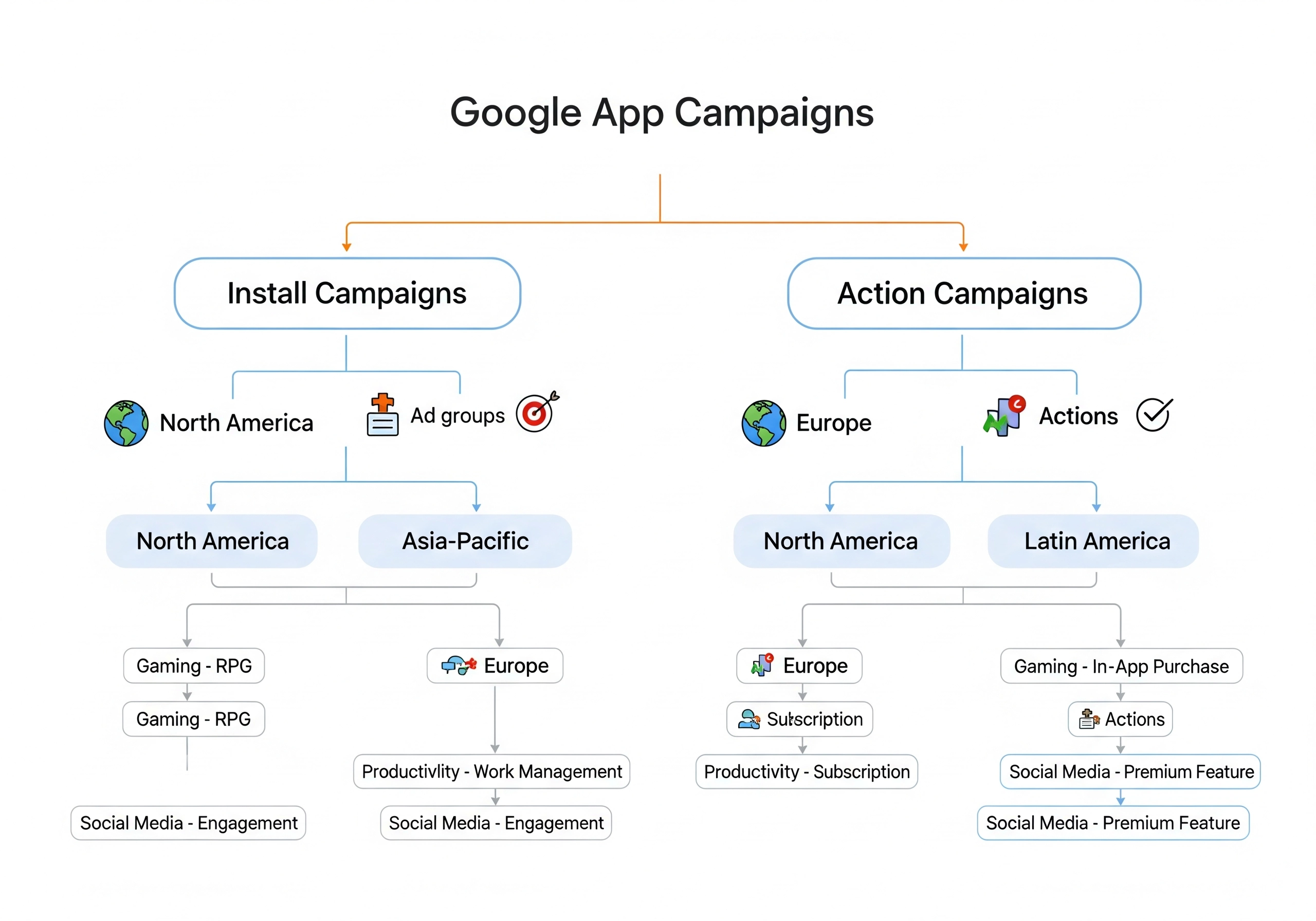
Implementing a Goal-Oriented Campaign Structure for Increased App Installs
Organize your campaigns by goal, such as “GAC – Android – Installs – Tier 1” for install-focused campaigns and “GAC – Android – Purchases – Tier 1” for purchase-focused campaigns. For growth, use App Install campaigns optimized for in-app actions. For monetization, use App Installs optimized for in-app purchases. For retention, leverage App Engagement with deep links. This structure ensures each campaign targets a specific objective, enhancing efficiency and ROI. By segmenting campaigns based on goals, you can tailor your messaging and bidding strategies to maximize the effectiveness of each campaign.
Step 4: Crafting Compelling Ad Creatives for Google Ads for App Installs and Enhanced User Engagement
Ad creatives are critical for Google App Campaigns, influencing both targeting and user engagement. Invest significant effort in developing ad creatives, particularly video, to persuade users to click and install your app. Highlight the core benefits of your app in a well-thought-out App Store listing, featuring keyword-rich text, eye-catching screenshots, and a compelling preview video. A poorly designed listing can deter downloads, so ensure it looks appealing and maintains a high average rating. As noted by industry experts, ad creative (especially video) is where the big wins are going to be made and it makes a huge difference.
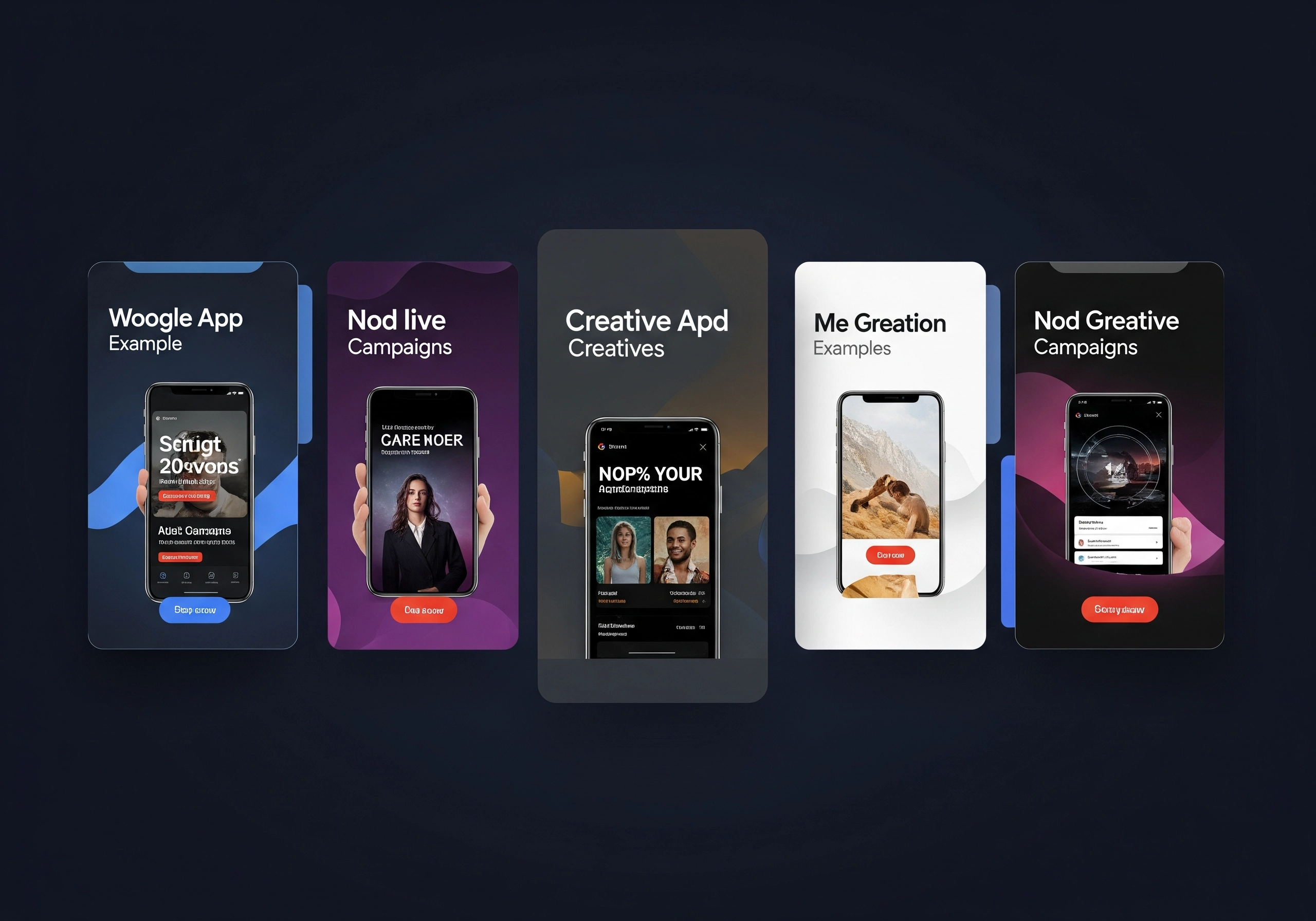
Leveraging Ad Strength to Optimize App Install Ads and Improve Campaign Performance
Ensure your Ad Strength is at least “Good” to enhance the performance of your ads. Use square and vertical video formats to engage mobile customers. Google’s algorithm experiments with different combinations of assets, so provide up to five text headlines, five descriptions, 20 images, 20 videos, and 20 HTML5 assets. Asset variety allows App Campaigns to create more ads that resonate with different users, improving overall campaign effectiveness. Consider using feeds in App Campaigns to highlight specific content from within your app, including products and offerings that are more customized and better targeted to existing and potential app users.
Step 5: Implementing Advanced Targeting Techniques for Mobile App Campaigns in 2025
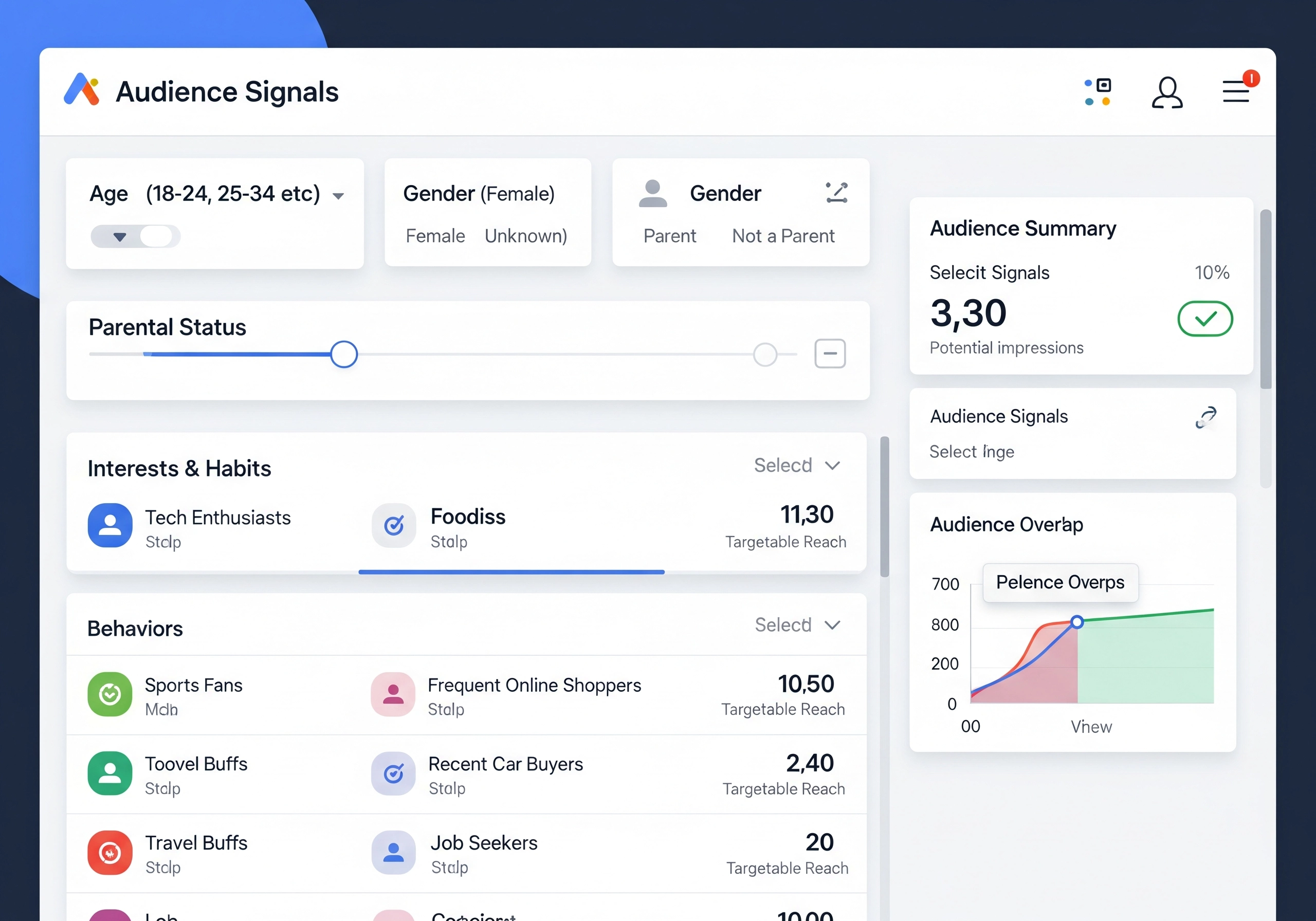
While Google App Campaigns offer limited manual targeting options, you can still influence targeting through ad creatives and audience signals. Focus on creating high-quality creatives that appeal to your ideal users. Utilize audience signals to help Google’s algorithms learn faster and reach your intended customers more efficiently. By combining compelling creatives with strategic audience signals, you can improve the relevance of your ads and drive better results in your mobile app campaigns. Remember, the key is to provide Google’s AI with the right signals to find your target audience effectively. What user behaviors indicate a potential app install?
Step 6: Mastering Bidding Strategies for Google App Campaigns to Maximize ROI
Choosing the right bidding strategy is crucial for maximizing the value of your Google App Campaigns. If you lack event volume, start with tCPI (Cost per Install). Scale to tCPA (in-app action) or tROAS (revenue) once you achieve approximately 50+ daily conversions. Target ROAS (return on ad spend) bidding is now available for iOS, helping marketers profitably acquire users. Maximize conversion bidding automatically sets bids to drive maximum in-app action volume or total value within your budget. Experiment with different bidding strategies to find what works best for your app and target audience. How does your bidding strategy align with your overall app marketing strategy?
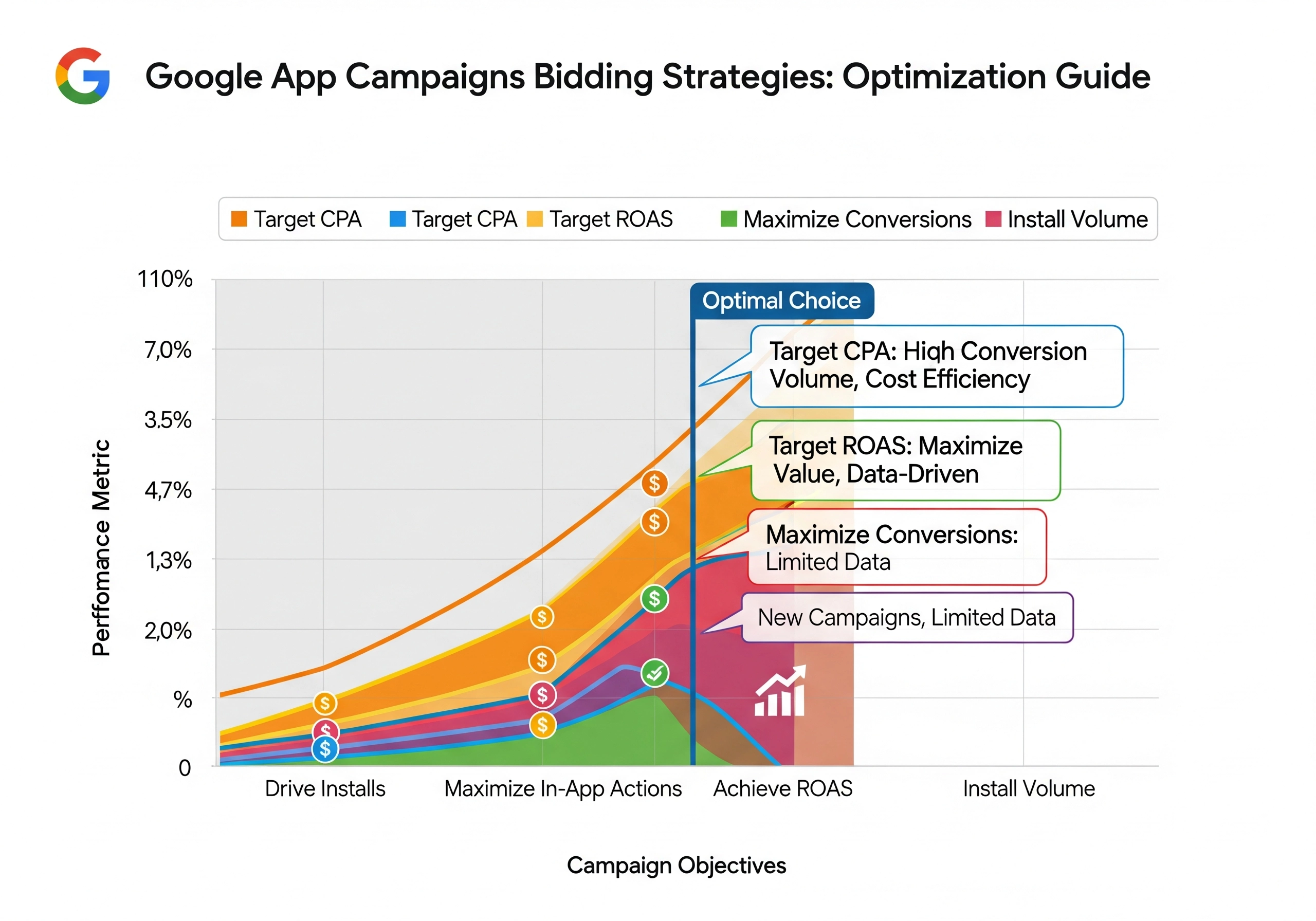
Optimizing Bids and Budgets for Google Ads App Campaigns to Enhance Performance
Implement a proper bid-budget ratio to ensure your campaigns are not constrained. Raise budgets or bids for constrained campaigns to increase their reach and effectiveness. Avoid setting a conversion value for your install event unless it has inherent economic value. For ACi campaigns, verify that the “Value” field for the install event is not tracking a value unless app installation has inherent value. Remember, a well-managed budget is essential for sustainable campaign performance.
Step 7: Tracking and Analyzing Performance of Your App Marketing Strategy for Continuous Improvement
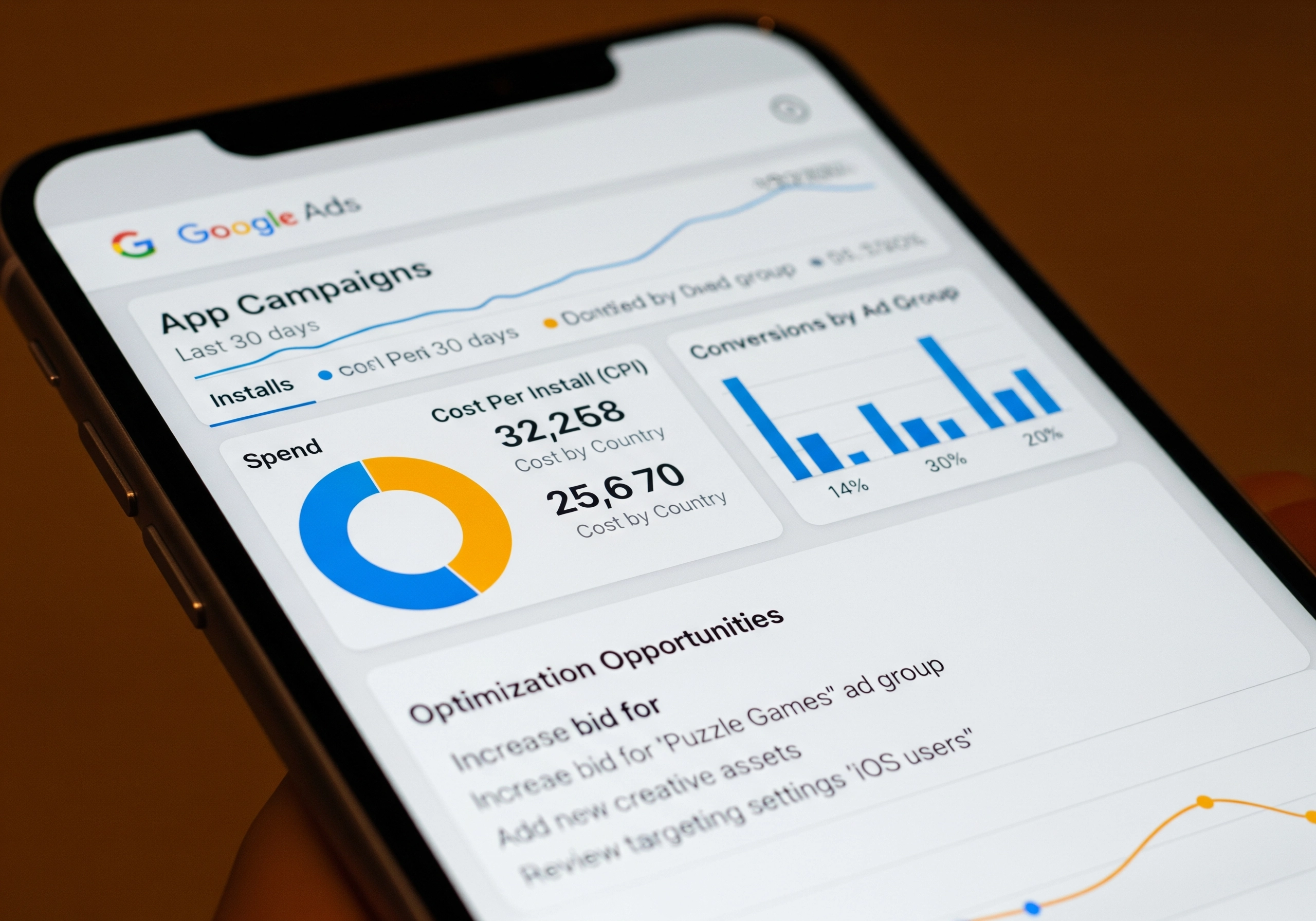
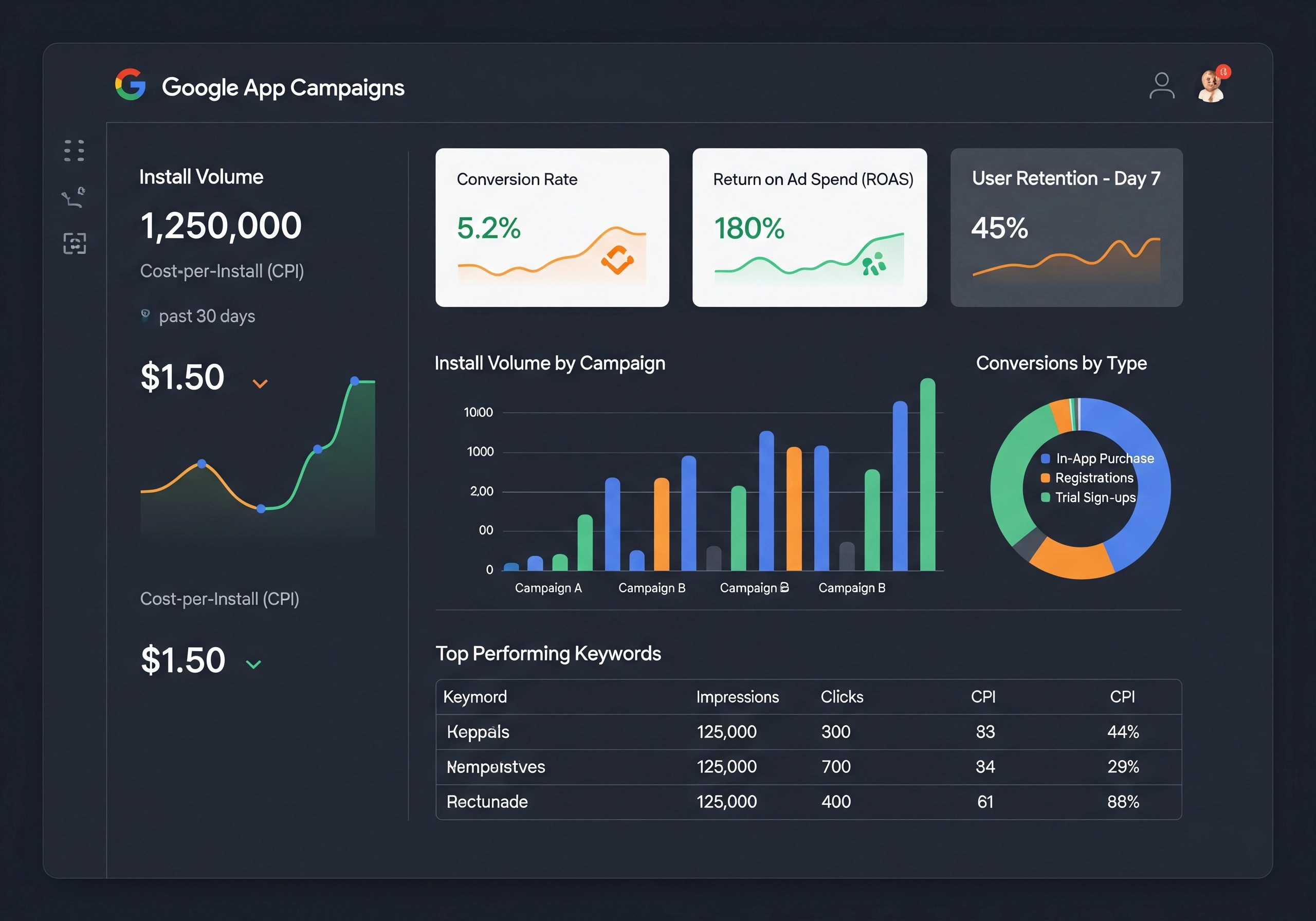
Effective event tracking is essential for optimizing Google App Campaigns. Set up custom in-app events tied to user value, such as purchases or trial starts. Optimize toward purchase, trial start, or deep funnel engagement once you have sufficient volume. Ensure real-time, deduplicated conversion syncing, preferably using Firebase for Google Ads. Regularly monitor your campaign performance and adjust your strategies based on the data to improve ROI. As the team at Digital Shift emphasizes, data-driven decisions are key to success. What metrics are most important for your app?
Leveraging Google Ads Features and Innovations for App Promotion
In 2025, Google Ads offers powerful AI innovations designed to enhance your marketing performance. Utilize cutting-edge measurement solutions and advertising tools to reach consumers effectively. Integrate app insights deeply into Google Ads workflows to optimize for both web and app touch points. By leveraging these features, you can stay ahead of the competition and drive significant growth for your app. Stay updated with the latest features and updates from Google Ads to maximize your campaign’s potential. How can you integrate these new features into your existing app campaigns?
Tips & Best Practices for App Marketing Strategy with Google App Campaigns in 2025
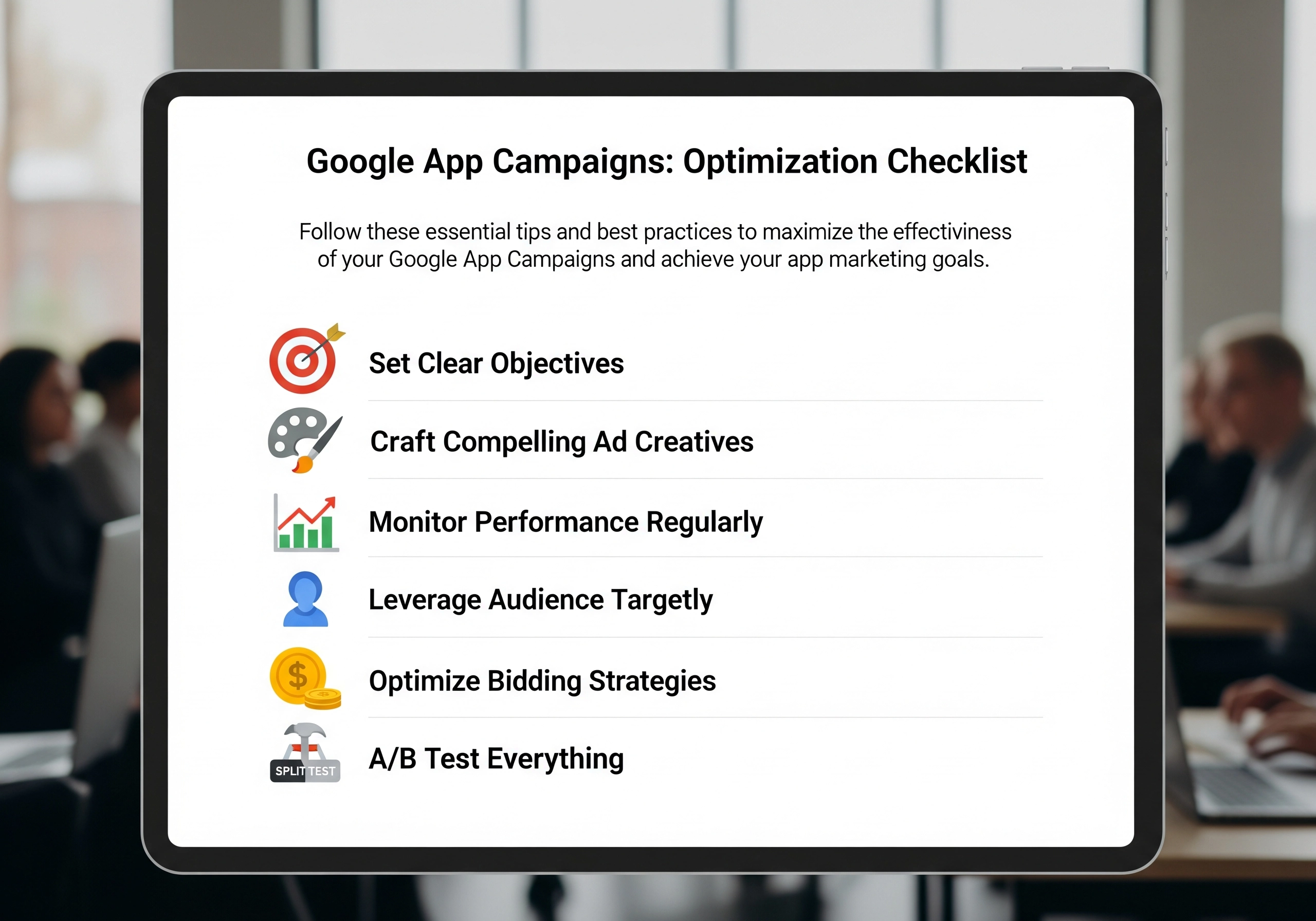
To excel with Google App Campaigns, understand how they work within Google’s ecosystem and determine their suitability for your app’s objectives. Master the core setup requirements, including account linking, tracking implementation, and creative asset preparation. Follow the complete step-by-step campaign creation process from objective selection to launch. Choose the optimal campaign type and bidding strategy to enhance ROI and achieve a competitive edge. Consider the advice from Srujan, experimenting and reiterating your strategies.
Avoiding Common Pitfalls in Google App Campaigns for Optimal Results
Avoid certain changes while the campaign is learning to maintain stability and performance. Confirm there is no app-level cannibalization to prevent internal competition. Enable attribution sharing to gain a comprehensive view of your campaign’s impact. Adhere to iOS best practices to optimize performance on Apple devices. By avoiding these pitfalls, you can ensure your campaigns run smoothly and deliver optimal results. What other common mistakes should marketers avoid?
Troubleshooting Common Issues with App Campaigns for Seamless Performance
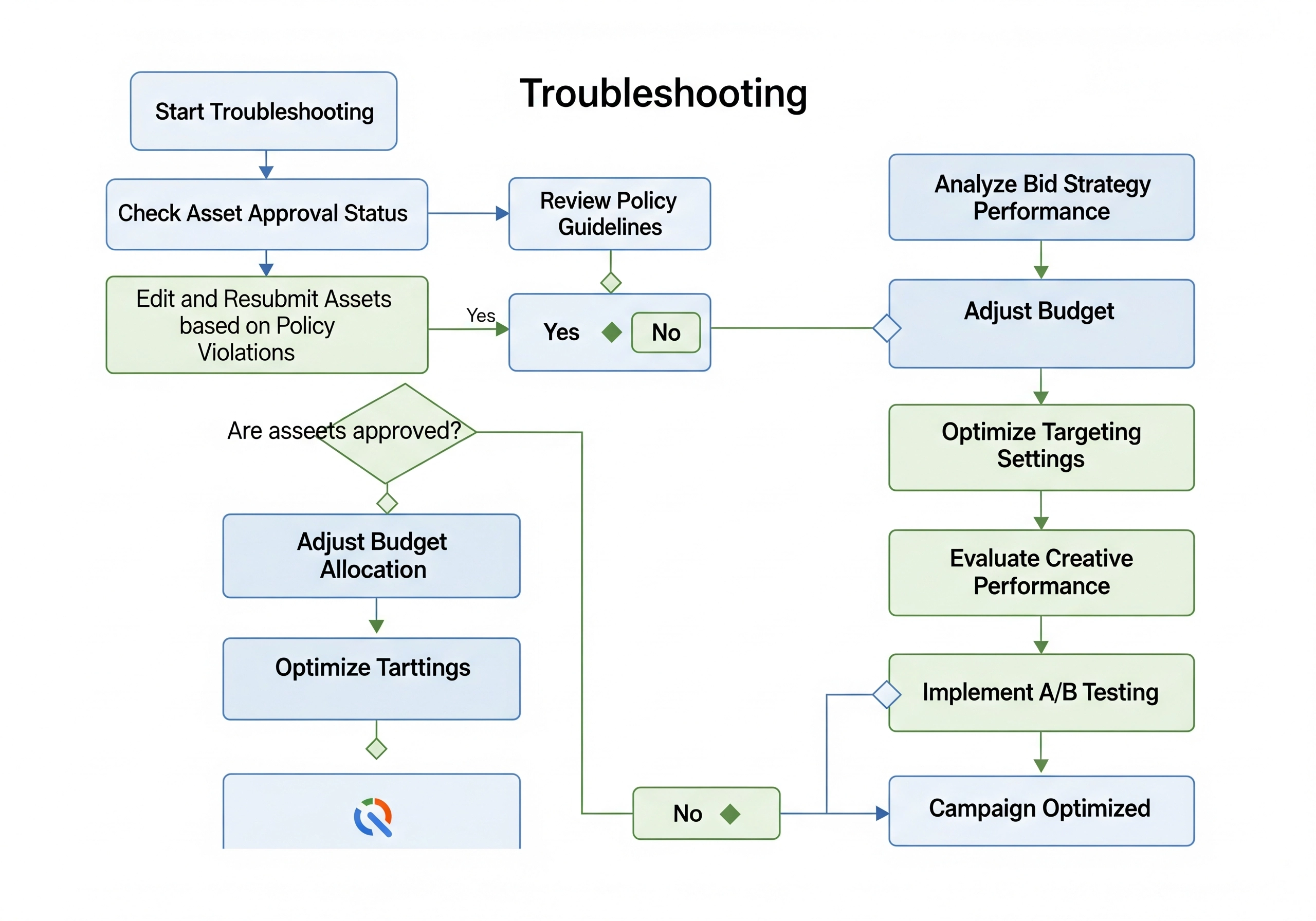
Address common issues by reviewing creative assets and replacing any low-performing ad copy and images. Check for an approved text, image, and video asset in each ad group to ensure broad serving across ad channels. If assets are not being approved, ensure they adhere to Google Ads policies. By proactively addressing these issues, you can maintain high campaign performance and avoid disruptions. Remember, consistent monitoring and optimization are essential for maintaining campaign health.
Conclusion: Achieving App Marketing Success with Google App Campaigns in 2025
Mastering Google App Campaigns is essential for driving app installs and engagement. By understanding the evolution of App Campaigns, defining clear objectives, structuring your campaigns effectively, and crafting compelling ad creatives, you can significantly improve your app’s performance. Implementing advanced targeting techniques, mastering bidding strategies, and tracking performance diligently will further enhance your results. Embrace the power of Google App Campaigns to unlock the full potential of your app and achieve app marketing success in 2025.
Key Takeaways: Optimizing Google App Campaigns for Success in 2025
Google App Campaigns in 2025 offer a powerful, AI-driven solution for promoting your app across Google’s extensive network. Key strategies include understanding the campaign’s evolution, setting clear objectives, structuring campaigns effectively, and crafting compelling ad creatives. Additionally, mastering bidding strategies and continuously tracking performance are crucial for optimizing results. By leveraging these tactics, you can maximize your app’s visibility, downloads, and user engagement, achieving significant marketing success in 2025.
Before diving into google app campaigns, it’s also crucial to understand how IT services work, ensuring your app is supported by robust infrastructure. Also, consider native advertising campaigns to complement your app promotion efforts and reach a wider audience.
Frequently Asked Questions About Google App Campaigns in 2025
How have Google App Campaigns evolved for 2025 with App Marketing in mind?
Google App Campaigns in 2025 feature Privacy Sandbox integration for cookieless tracking, enhanced AI-powered creative optimization, and expanded YouTube Shorts placements. These advancements ensure better compliance with data protection regulations while maintaining advertising effectiveness for app marketing.
What are the primary campaign objectives for Google App Campaigns for App Promotion?
The primary campaign objectives are install volume (Cost-per-install) and in-app actions. Choosing the right objective depends on your app’s specific goals, such as increasing downloads or driving engagement for app promotion.
How should I structure my Google App Campaigns for Mobile App Campaigns?
Structure your campaigns with separate entities for installs and actions for each targeted region. Each campaign can include multiple ad groups to segment and test different themes or app features for your mobile app campaigns.
What are the key elements of compelling ad creatives for App Install Ads?
Key elements include keyword-rich text, eye-catching screenshots, and a compelling preview video. Highlighting the core benefits of your app and ensuring an appealing App Store listing are also crucial for app install ads.
What bidding strategies should I use for Google Ads App Campaigns to maximize app downloads?
Start with tCPI if you lack event volume and scale to tCPA or tROAS once you have sufficient conversions. Target ROAS bidding is now available for iOS to help profitably acquire users and maximize app downloads.
Explore Digital Shift for cutting-edge digital marketing solutions, including SEO, PPC, and app marketing.