
Why Are Modern IT Services the Unseen Engine of Business Growth?

In the relentless pursuit of growth, many businesses overlook the true power source propelling them forward: modern IT services. Far from being mere technical support, today’s IT services essentials are the strategic architects and operational backbone of any thriving enterprise, seamlessly integrating technology to drive efficiency and innovation.
Imagine an orchestra where every instrument plays in perfect harmony, not by chance, but by the precise direction of an unseen conductor. Modern IT services act as this conductor, orchestrating a complex array of digital tools and infrastructure that underpin every facet of business operations. Without this foundational layer, even the most brilliant business strategies would falter.
The Silent Revolution: From Support to Strategy
The perception of IT has shifted dramatically. Where it once served as a reactive ‘fix-it’ department, it has evolved into a proactive, strategic partner. Modern IT services provide the critical infrastructure, robust security protocols, and adaptive support necessary for businesses to not just operate, but to scale effectively and compete vigorously. This transition marks a profound change, moving from cost center to profit enabler.
Modern IT services are the bedrock upon which all digital transformation efforts are built.
The numbers underscore this transformation. The global managed services market, a key component of modern IT services, is projected to reach an astounding $557.10 billion by 2032, demonstrating an impressive compound annual growth rate (CAGR) of 11.1% from 2023. This explosive growth reflects a clear recognition across industries that outsourcing and professional management of digital assets are no longer optional luxuries but strategic imperatives.
Fueling Efficiency and Fortifying Defenses
For many organizations, particularly small and medium-sized enterprises (SMEs), adopting managed IT services is a game-changer. It allows them to reduce operational costs and significantly improve overall efficiency by leveraging specialized expertise they might not afford in-house. This strategic shift enables powerful automation, facilitates data-driven decision-making, and ensures seamless communication across all departments.
Beyond efficiency, Business IT operations are increasingly focused on resilience. Cybersecurity, for instance, remains a top concern, with businesses rapidly increasing investment in managed security services to safeguard against an ever-evolving threat landscape. Furthermore, the continued ascent of cloud-based IT services offers unparalleled scalability and flexibility, ensuring businesses can adapt quickly to market demands.
These integrated services are not just about keeping the lights on; they are about illuminating new pathways to growth and competitive advantage. They empower businesses to innovate faster, serve customers better, and navigate the complexities of the digital age with confidence. To truly understand the daily rhythm and strategic depth required, consider exploring the intricate world of IT service operations. For further insights into why businesses are embracing this change, you might find value in understanding Why Your Business Needs Managed IT Services in 2025 on LinkedIn.
What Defines Managed IT Services in Today’s Rapidly Evolving Landscape?
The digital landscape has fundamentally reshaped how businesses operate, transitioning IT from a reactive cost center to a strategic enabler. Gone are the days when IT support simply meant fixing a broken printer or recovering a lost file after an issue arose. Today, Managed IT services represent a comprehensive, proactive approach, fundamentally redefining how organizations leverage technology for growth and resilience.
At its core, managed IT services involve outsourcing the management and maintenance of your entire IT infrastructure to a specialized third-party provider. This includes everything from network and server monitoring to data backup, cybersecurity, and end-user support. Unlike the traditional ‘break-fix’ model, where an IT professional is called only when something goes wrong, a managed service provider (MSP) continuously monitors systems, anticipates potential issues, and implements preventative measures.
The Shift from Reactive to Proactive IT Management
The most significant differentiator for modern managed IT services is their inherent proactivity. Instead of waiting for a system failure to impact operations, MSPs employ advanced tools and expert personnel to identify and mitigate risks before they escalate. This continuous oversight ensures optimal performance, minimal downtime, and robust security posture.
Modern businesses thrive on uninterrupted operations and resilient technology.
This strategic foresight is crucial in an era where cyber threats are increasingly sophisticated and the demand for always-on connectivity is paramount. Providers offer critical IT service operations that extend far beyond basic troubleshooting, embracing a holistic view of a company’s technological health.
Comprehensive Scope of Managed IT Services
What truly defines Managed IT services today is their expansive and integrated scope. Businesses gain access to a dedicated team of experts who handle diverse technological needs, often around the clock. This can encompass:
- 24/7/365 Monitoring & Support: Continuous surveillance of networks, servers, and endpoints to detect anomalies and resolve issues swiftly, often before users even notice them. (Source: Red Level Group)
- Cybersecurity Management: Implementing robust security protocols, threat detection, incident response, and compliance adherence to protect sensitive data from evolving threats. Cybersecurity is a top concern, driving increased investment in managed security services.
- Cloud Integration & Management: Assisting with migration to cloud platforms, optimizing cloud resources, and ensuring seamless operation of cloud-based applications.
- Data Backup & Disaster Recovery: Establishing secure backup solutions and comprehensive recovery plans to ensure business continuity in the face of unforeseen events.
- Network Management: Optimizing network performance, ensuring connectivity, and managing critical infrastructure.
This comprehensive approach allows businesses, particularly small and medium-sized enterprises (SMEs), to reduce operational costs and improve efficiency by leveraging external expertise without the overhead of an in-house IT department. It’s about integrating IT support with business goals to drive growth and efficiency, as highlighted by iCorps.
Strategic Benefits and Evolving Landscape
The value proposition of managed IT services extends beyond mere technical support; it’s about strategic partnership. MSPs provide invaluable Managed IT insights into technological trends, potential optimizations, and future-proofing strategies. They help businesses navigate complexities like the growing adoption of AI and machine learning in IT service management, and the increasing need for robust support for remote workforces.
Managed IT services empower businesses to adapt and innovate in a dynamic digital world.
By entrusting their IT operations to experts, companies can focus on their core competencies, drive digital transformation, and maintain a competitive edge. This proactive engagement, coupled with access to cutting-edge tools and specialized knowledge, defines the essence of modern managed IT services in today’s rapidly evolving technological landscape.
How Can a Robust IT Infrastructure Bolster Your Business Against Future Threats?

In an era defined by rapid technological shifts and evolving threats, a business’s ability to withstand disruption hinges on the strength of its underlying digital framework. A truly robust IT infrastructure transcends mere operational necessity; it becomes a strategic defense and a catalyst for future growth, shielding your enterprise from unexpected challenges.
Cybersecurity: Your Digital Fortress
Modern businesses face a relentless barrage of sophisticated cyber threats. From ransomware to data breaches, the landscape is constantly evolving, making proactive cybersecurity paramount. Your IT infrastructure must integrate multi-layered defenses, including advanced firewalls, intrusion detection systems, and robust endpoint protection.
This comprehensive approach safeguards sensitive data and ensures business continuity, a top concern for companies globally. A secure infrastructure isn’t just about preventing attacks; it’s about building trust and protecting your brand. Investing in cutting-edge security measures is no longer optional; it’s fundamental to safeguarding your intellectual property and customer information.
Cloud Management: Agility and Scale
The shift to cloud-based IT solutions for business offers unparalleled flexibility and scalability, crucial for adapting to market demands and supporting remote workforces, which remain prevalent. Effective cloud management ensures that your data and applications are accessible, secure, and perform optimally across various environments.
This includes strategic deployment of Infrastructure as a Service (IaaS), Platform as a Service (PaaS), and Software as a Service (SaaS) models. Properly managed cloud resources allow businesses to scale operations up or down rapidly, without significant capital expenditure, providing a resilient and adaptable foundation.
Network Performance: The Lifeline of Operations
Reliable network performance is the circulatory system of your digital enterprise. Slow connections, frequent outages, or inefficient data transfer can cripple productivity and lead to significant financial losses. A robust network infrastructure prioritizes high-speed connectivity, minimal latency, and consistent uptime.
This involves optimized routing, load balancing, and redundant systems to prevent single points of failure. Uninterrupted network performance ensures seamless communication and continuous access to critical business applications. Proactive monitoring and maintenance, often provided through expert IT support, are essential for identifying and resolving potential issues before they impact operations.
Building Future Resilience Through Strategic IT Solutions
Integrating these core components—cybersecurity, cloud management, and network performance—creates an IT infrastructure that is not only robust but also future-proof. It empowers your business to adopt emerging technologies like AI and edge computing, knowing that the underlying systems can support them.
This strategic approach to IT solutions for business minimizes downtime, protects against data loss, and enables rapid recovery from unforeseen disasters. Businesses increasingly rely on comprehensive strategies to ensure their technological backbone is resilient, leveraging game-changing IT tools to stay ahead. For more insights into how businesses are fortifying their digital foundations, explore these game-changing IT tools that every business needs.
By proactively strengthening your IT infrastructure, you’re not just reacting to threats; you’re building a foundation that can confidently navigate the complexities of tomorrow’s digital landscape. Continuous adaptation and expert small business IT support strategies are key to maintaining this essential competitive edge.
Can Outsourcing IT Support Truly Be More Efficient and Cost-Effective?
The notion of handing over critical IT functions to an external provider often sparks a debate: can it truly deliver on promises of superior efficiency and cost savings? Many business leaders initially envision a loss of control or a decline in responsiveness. However, the modern landscape of IT services tells a different story, one where strategic outsourcing has become a cornerstone for operational excellence.
Unlocking Unparalleled Expertise and Efficiency
One of the most compelling arguments for why businesses outsource IT support lies in immediate access to specialized expertise. Instead of maintaining a costly in-house team with diverse skill sets, companies can tap into a collective pool of professionals covering everything from network architecture to cybersecurity. This means that highly complex issues are resolved by experts, not generalists, often with greater speed and precision.
Outsourcing transforms your IT from a reactive cost center into a proactive, strategic asset.
This shift allows for 24/7 monitoring and rapid incident response, which is crucial in today’s always-on business environment. The global managed services market, projected to reach $557.10 billion by 2032, underscores this trend, demonstrating a clear move towards leveraging external providers for comprehensive IT needs. This often provides the robust technical support behind scenes that keeps operations running smoothly without internal strain.
The Clear Path to Cost Predictability
Beyond just efficiency, the financial benefits of outsourcing IT support are substantial and often more predictable than an in-house model. When you staff an internal IT department, you bear the full weight of salaries, benefits, training, and equipment costs, which can fluctuate wildly with technological advancements or staffing changes. Outsourcing, conversely, typically involves a fixed monthly fee, transforming variable costs into stable operational expenses.
This predictability is particularly attractive for small and medium-sized enterprises (SMEs) who are increasingly adopting managed IT services to reduce operational costs and improve efficiency. They gain enterprise-level support without the enterprise-level overhead.
Scalability and Strategic Focus
Modern businesses need agility to adapt to market shifts, and IT infrastructure must follow suit. Outsourcing provides unparalleled scalability, allowing companies to quickly adjust their IT resources up or down based on demand without the lengthy recruitment cycles or costly infrastructure investments. This flexibility ensures that IT infrastructure can support growth spikes or navigate downturns seamlessly.
With outsourced IT, your business gains the agility to scale without the capital expenditure.
By entrusting IT management to specialists, internal teams are freed from daily technical firefighting. This allows them to concentrate on core business activities, innovation, and strategic initiatives that directly contribute to revenue and competitive advantage. The continued growth of cloud-based IT services further amplifies this, offering immense scalability and flexibility that managed service providers are adept at handling.
Addressing Common Concerns and Future-Proofing
While concerns about data security and vendor reliability are valid, leading outsourced IT providers prioritize robust security protocols and transparent service level agreements (SLAs). Cybersecurity, for instance, is a top concern for businesses, and many are increasing their investment in managed security services to protect against evolving threats. Reputable providers offer advanced security measures that might be cost-prohibitive for a single business to implement internally. For insights into top providers, explore the Best Managed IT Service Providers in the USA (2025 Edition).
Ultimately, outsourcing IT support offers a strategic advantage by providing expert, cost-effective, and scalable solutions that empower businesses to focus on their growth while ensuring a resilient and high-performing technical backbone.
What Key Components Make Up Effective IT Service Management in 2025?
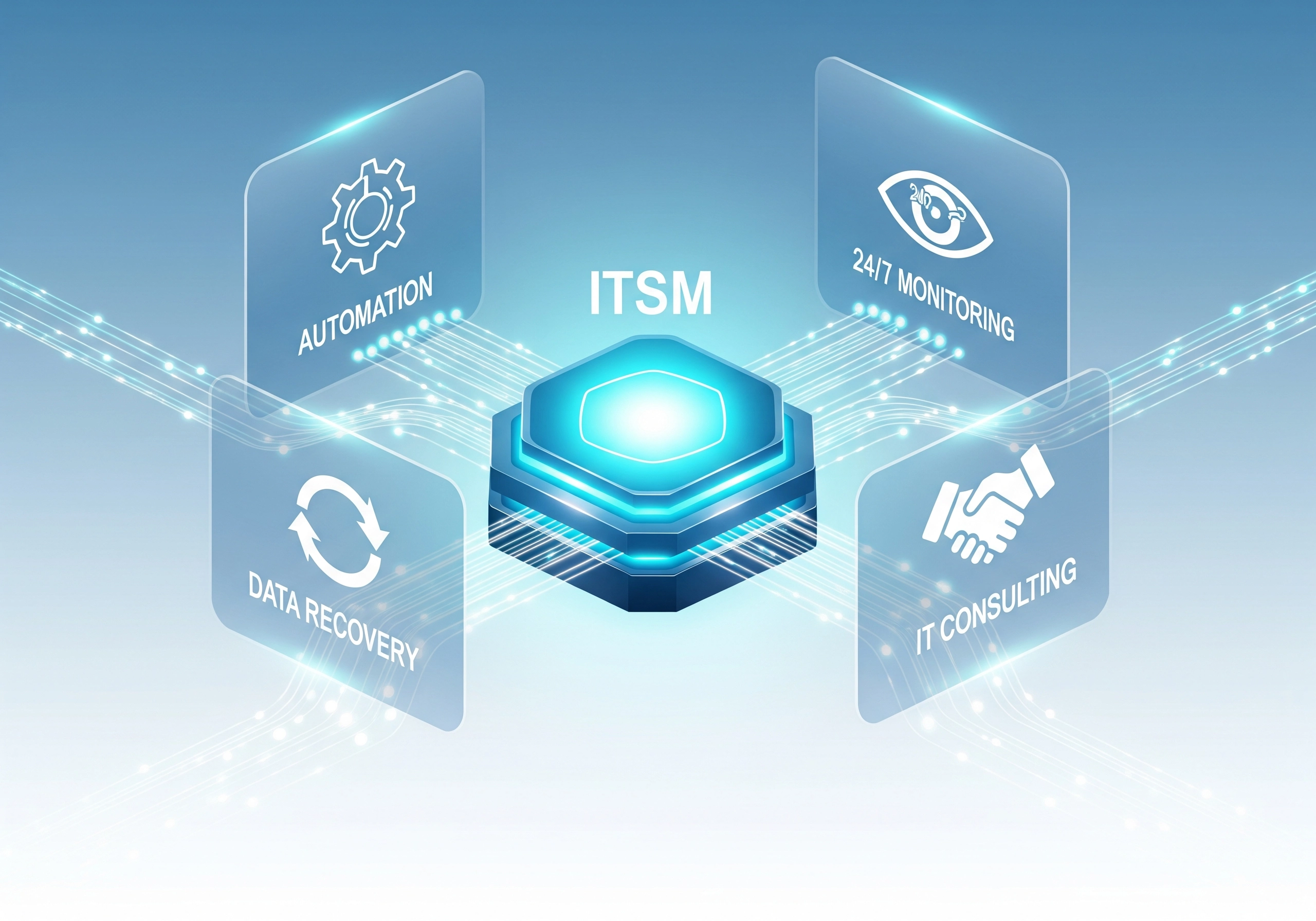
The digital landscape of 2025 demands more than just responsive IT support; it requires a proactive, integrated approach to IT service management (ITSM) that aligns technology with core business objectives. Effective ITSM is no longer a luxury but the fundamental bedrock for seamless business IT operations, driving efficiency, resilience, and strategic growth. Organizations that master these components don’t just react to issues; they anticipate, innovate, and lead.
The Foundational Pillars of Modern ITSM
At its core, effective IT service management relies on several key processes designed to deliver and support IT services with measurable quality and efficiency. These foundational pillars ensure that technology serves the business consistently and reliably.
Incident Management: Restoring Service Swiftly
Incident management focuses on quickly restoring normal service operation and minimizing business impact. In 2025, this process is supercharged by artificial intelligence (AI) and machine learning (ML), which predict potential outages and automate first-line responses. This allows for rapid diagnosis and resolution, often before users even notice a disruption.
Quick resolution of IT incidents is paramount for maintaining productivity and user satisfaction.
Problem Management: Eradicating Root Causes
Beyond just fixing incidents, problem management delves deeper to identify and eliminate the underlying causes of recurring issues. This proactive approach prevents future incidents, significantly reducing downtime and improving overall system stability. By 2025, AI-driven analytics sift through vast amounts of operational data, identifying patterns and suggesting permanent solutions that manual analysis might miss.
Change Management: Navigating Evolution Securely
Change management ensures that all IT changes—from software updates to infrastructure upgrades—are performed in a controlled, systematic manner to minimize risks and disruptions. With the rapid pace of technological evolution, robust change management is critical. Automated approval workflows and impact analysis tools, often powered by predictive analytics, are central to managing complex transformations while safeguarding business IT operations.
Service Level Management: Defining Expectations and Delivery
Service Level Management (SLM) establishes clear agreements between IT service providers and their customers, defining the expected quality, availability, and performance of services. This clarity builds trust and provides a framework for measuring success. Modern SLM leverages real-time dashboards and automated reporting, ensuring transparency and accountability for critical services.
The 2025 Edge: Automation, AI, and Self-Service
The most effective IT service management strategies by 2025 integrate advanced technologies to enhance traditional processes, making them more agile, intelligent, and user-centric. The global managed services market is projected to reach $557.10 billion by 2032, highlighting the growing reliance on specialized providers to deliver these advanced capabilities.
Intelligent Automation and AI-Driven Analytics
Automation is no longer just about scripting repetitive tasks. By 2025, AI and ML are deeply embedded in ITSM, automating everything from incident triage and routing to predictive maintenance and anomaly detection. This allows IT teams to shift from reactive firefighting to strategic initiatives, greatly improving the efficiency of business IT operations. These intelligent systems can predict potential issues, offering solutions before they impact users, a significant leap from traditional monitoring.
Empowering Users with Self-Service Portals
Modern ITSM prioritizes user empowerment through intuitive self-service portals. These portals act as a single point of contact for users to request services, report issues, and find solutions through extensive knowledge bases. AI-powered chatbots and virtual assistants provide instant support, resolving common queries and freeing up IT staff for more complex tasks. This approach significantly boosts user satisfaction and reduces the workload on support teams.
Self-service capabilities are critical for scaling support without escalating costs, a key driver for SMEs adopting managed IT services.
Essential Services for 2025-Ready IT Operations
Beyond the core processes and technological enhancements, specific services are non-negotiable for effective IT service management in 2025.
24/7 Monitoring and Proactive Problem Detection
Continuous, round-the-clock monitoring of all IT infrastructure and applications is essential. This includes networks, servers, cloud environments, and endpoints. Advanced monitoring tools, often part of managed IT services, utilize AI to identify performance bottlenecks, security vulnerabilities, and potential failures in real-time. This proactive stance is vital given the increasing sophistication of cybersecurity threats, which demand constant vigilance.
Robust Data Recovery and Business Continuity Planning
With data being the lifeblood of modern business, comprehensive data recovery strategies and robust business continuity plans are paramount. Effective ITSM includes regular backups, disaster recovery testing, and clear protocols to ensure rapid recovery from any data loss event, natural disaster, or cyberattack. This minimizes downtime and protects critical information, a top concern for businesses increasing investment in managed security services.
Strategic IT Consulting and Roadmap Development
Modern IT service management extends into strategic partnership. Expert IT providers offer consulting services to help businesses align technology investments with long-term goals. This includes advising on cloud adoption, cybersecurity best practices, digital transformation initiatives, and developing a clear IT roadmap. This strategic input ensures that IT infrastructure supports future growth and maintains a competitive edge, especially with the continued growth of cloud-based IT services.
Effective IT service management in 2025 integrates traditional processes with cutting-edge technology and a suite of essential services to create a resilient, efficient, and forward-looking IT environment. It’s about ensuring that technology isn’t just a cost center but a powerful enabler of business success.
How Do Proactive IT Strategies Drive Digital Transformation and Competitive Advantage?
The era of reactive IT, where systems were patched only when they broke, is long gone. Today’s competitive landscape demands a fundamental shift towards proactive IT strategies, which are not merely about maintenance but about foresight and innovation. Businesses that embrace this forward-thinking approach are not just surviving; they are actively driving their digital transformation and securing a significant competitive advantage.
The Strategic Imperative of Proactive IT
Proactive IT moves beyond incident response to anticipate future needs and potential challenges. It involves strategically planning for infrastructure scaling, cybersecurity defenses, and technological advancements before they become urgent. This mindset ensures that technology serves as an enabler rather than a bottleneck, positioning businesses for sustained growth and market leadership.
Investing in foresight is investing in future resilience and growth.
This deliberate approach to IT solutions for business allows organizations to continually optimize operations, enhance customer experiences, and innovate rapidly. It’s the difference between merely using technology and leveraging it as a strategic asset.
Fueling Digital Transformation Through Anticipation
Digital transformation is an ongoing journey, not a destination. Proactive IT strategies are the engine that propels this journey forward. By continuously evaluating emerging technologies and integrating them thoughtfully, businesses can adapt quickly to market shifts and customer demands.
This involves embracing cloud-based IT services, which offer unparalleled scalability and flexibility, a key factor given the projected global managed services market growth to $557.10 billion by 2032. It also means staying ahead of evolving cybersecurity threats, a top concern for businesses worldwide.
Proactive IT ensures that your digital infrastructure is not just current, but future-ready.
Consider how a modern digital marketing agency operates. They rely heavily on robust IT infrastructure to manage complex marketing strategy initiatives, from online advertising campaigns to sophisticated search engine optimization tactics. Without proactive IT, their ability to execute quickly and effectively would be severely hampered.
Gaining a Decisive Competitive Edge
In a market flooded with similar offerings, competitive advantage often hinges on operational efficiency and the ability to innovate faster. Proactive IT strategies deliver precisely this by streamlining workflows, reducing downtime, and fostering an environment ripe for technological exploration.
By leveraging advanced IT services essentials, businesses can automate routine tasks, free up human capital for strategic initiatives, and gain deeper insights from data. This proactive stance extends beyond internal systems to external facing initiatives, such as optimized paid ads and successful google app campaigns.
The Role of Innovation and Customer Experience
Proactive IT drives innovation by providing the stable, secure, and scalable platforms needed to experiment with new ideas and bring them to market faster. This directly impacts customer experience, as seamless digital interactions become the norm.
For instance, businesses can quickly deploy new website development features, optimize landing page design, or launch targeted app marketing efforts. This constant evolution keeps customers engaged and differentiates the business from competitors.
Partnering for Proactive Success
Realizing the full potential of proactive IT often requires specialized expertise. This is where strategic partnerships become invaluable. Engaging with a firm like digital shift india, a leading digital marketing agency, ensures that your IT infrastructure is aligned with your overarching business and marketing strategy goals.
They understand that modern IT solutions are intrinsically linked to effective brand positioning and driving eCommerce sales. Such comprehensive support is vital for any modern digital marketing agency, enabling them to deliver cutting-edge digital marketing solutions, including sophisticated native advertising agency strategies.
Proactive IT strategies are the bedrock upon which successful digital transformation is built, yielding measurable competitive advantages through efficiency, innovation, and superior customer engagement. This strategic investment is non-negotiable for businesses aiming to thrive in the dynamic digital economy.
Ready to future-proof your business with cutting-edge IT solutions? Discover how Digital Shift can empower your operations and drive growth.
Frequently Asked Questions About IT Services in 2025
What are the most important IT services for businesses in 2025?
In 2025, essential IT services include robust cybersecurity, agile cloud management, comprehensive IT infrastructure, proactive IT support, and strategic IT service management. These services are crucial for operational resilience, digital transformation, and maintaining a competitive edge.
How do Managed IT Services differ from traditional IT support?
Managed IT Services offer a proactive and strategic approach, focusing on preventing issues before they arise through 24/7 monitoring and management. Traditional IT support is often reactive, addressing problems only when they occur (break-fix model).
Can outsourcing IT support really save my business money?
Yes, outsourcing IT support can be more cost-effective by providing access to specialized expertise without the overhead of hiring a full-time team. It offers predictable costs, scalability, and allows your internal staff to focus on core business functions.
What is IT Service Management (ITSM) and why is it important?
ITSM is a framework for managing IT services effectively, encompassing incident, problem, change, and service level management. It ensures IT operations are efficient, resilient, and aligned with business objectives, especially with the integration of AI and automation in 2025.
How can a strong IT infrastructure protect my business?
A robust IT infrastructure, including strong cybersecurity measures, reliable networks, and scalable cloud solutions, acts as a shield against evolving threats. It ensures business continuity, protects sensitive data, and supports the adoption of new technologies for sustained growth.
What role do proactive IT strategies play in digital transformation?
Proactive IT strategies are the backbone of digital transformation. By anticipating future needs and investing in advanced IT services, businesses can innovate faster, enhance customer experiences, streamline operations, and achieve market leadership.