
What Essential IT Services Keep Your Business Running Smoothly?
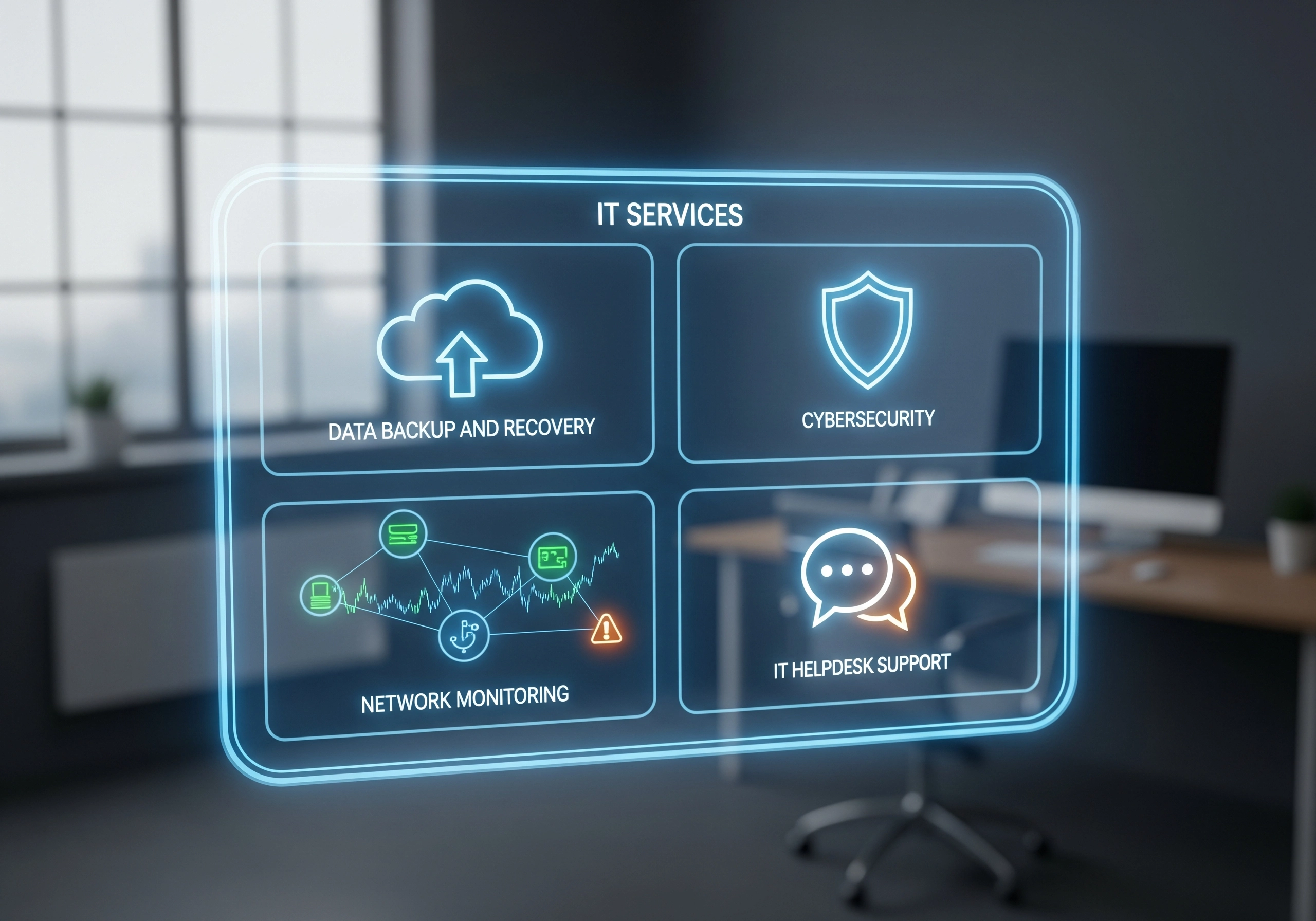
Every modern business operates on a foundation of technology. When this foundation falters, operations grind to a halt, productivity plummets, and profitability suffers. This reality underscores the critical importance of robust IT services and proactive IT support for seamless business continuity.
The Foundation: Understanding Core IT Services
Essential IT services encompass strategic and operational functions designed to optimize technological infrastructure, enhance security, and empower your workforce. They move beyond mere “break-fix” solutions, offering a proactive shield against disruptions.
Effective IT services are the silent engine of modern business efficiency.
These services orchestrate an entire digital ecosystem, ensuring systems are reliable, secure, and available. This allows your team to focus on core competencies.
Proactive Monitoring & Cybersecurity Defenses
Continuous monitoring is critical for modern IT services, involving vigilant oversight of network performance and server health. Paired with robust cybersecurity, it forms the first line of defense against evolving threats; breaches increased by 13% in 2024. Expert IT support teams implement multi-layered security, significantly reducing costly incidents.
Data Backup, Recovery, and Business Continuity
Losing all critical business data due to hardware failure or cyberattack can be catastrophic. Essential IT services include comprehensive data backup and disaster recovery solutions, ensuring information is securely stored offsite and rapidly restored.
Downtime can cost businesses an average of $5,600 per minute.
These services guarantee business continuity, minimizing impact and ensuring swift resumption. Understanding these capabilities is part of robust IT systems reliability.
Responsive Help Desk and User Support
Users will encounter technical issues. A responsive help desk is a cornerstone of effective IT support, providing immediate assistance for everyday problems like password resets or software glitches. This ensures employees remain productive, preventing minor issues from escalating. This user-centric approach is vital for operational momentum and integral to seamless IT service operations.
Strategic IT Consulting and Infrastructure Management
Beyond daily operations, essential IT services extend to strategic consulting. This aligns technology investments with business objectives, planning for scalability, and optimizing infrastructure. IT consultants help businesses leverage emerging technologies, ensuring their roadmap supports growth.
Outsourcing IT functions can reduce IT costs by 25-45%.
By outsourcing these critical IT services, businesses gain specialized expertise and cutting-edge tools without the overhead of an in-house department, as noted by CloudOrbis. This transforms IT from a cost center into a powerful enabler of growth.
Why Are Managed IT Services a Strategic Imperative for Modern Businesses?
The digital landscape is no longer a static backdrop; it’s a rapidly evolving, complex ecosystem where technology underpins every facet of modern commerce. Businesses today grapple with an onslaught of cyber threats, the constant pressure for innovation, and the intricate demands of maintaining robust, high-performing IT infrastructure. This shift makes relying on traditional, reactive IT models increasingly untenable, paving the way for a more strategic approach.
The Shift from Reactive to Proactive IT Management
Historically, IT support often functioned as a break/fix model—issues were addressed only after they caused disruption. This reactive stance led to costly downtime and significant operational inefficiencies. The modern business environment, however, demands foresight and continuous optimization.
Proactive IT management is the cornerstone of business resilience and sustained growth.
This is where managed IT services emerge as a strategic imperative. Rather than waiting for a server to fail or a security breach to occur, managed service providers (MSPs) offer continuous monitoring, preventative maintenance, and rapid response, transforming IT from a cost center into a strategic asset.
Unlocking Operational Efficiency and Cost Savings
One of the most compelling advantages of adopting managed IT services is the significant potential for cost reduction and operational efficiency. Small and medium-sized businesses (SMBs), in particular, can slash their IT expenditures by 25-45% when outsourcing these functions. This isn’t merely about cutting costs; it’s about reallocating resources to core business activities that drive revenue.
Downtime, a silent killer of productivity, can cost businesses an average of $5,600 per minute. IT solutions provided by managed service providers work to virtually eliminate this risk through 24/7 monitoring and predictive analytics, ensuring systems remain operational and employees stay productive. Businesses gain predictable monthly IT expenses, replacing volatile capital outlays with a clear operating budget.
Fortifying Cybersecurity in a Threat-Laden World
The digital threat landscape grows more sophisticated by the day, with cybersecurity breaches increasing by 13% in 2024. For many organizations, keeping pace with evolving threats and compliance requirements is a monumental challenge. Managed IT services provide access to specialized cybersecurity expertise, tools, and protocols that most in-house teams simply cannot match.
These providers deploy multi-layered security frameworks, including advanced threat detection, intrusion prevention, and regular security audits. This comprehensive approach safeguards sensitive data, protects intellectual property, and ensures regulatory compliance, mitigating financial and reputational damage from cyberattacks. It’s about building a digital fortress around your business assets.
Access to Specialized Expertise and Scalability
Modern technology demands highly specialized skills across diverse domains, from cloud architecture to data analytics and advanced networking. Hiring and retaining in-house talent for every IT discipline is often cost-prohibitive and challenging, especially for growing businesses. IT services for business delivered by an MSP offer immediate access to a deep bench of experts without the overheads of full-time employment.
This expertise isn’t just about problem-solving; it’s about strategic guidance. Managed service providers help businesses leverage cutting-edge technologies like AI-powered IT automation, staying competitive and innovative. Furthermore, these services are inherently scalable, adapting effortlessly to your business’s growth or contraction without the need for significant capital expenditure on new hardware or staff. This agility is crucial in today’s fast-paced market.
Empowering Business Growth and Innovation
Ultimately, the strategic value of managed IT services lies in their ability to free businesses from the burden of IT management, allowing them to redirect focus and resources towards their primary objectives. When IT infrastructure is robust, secure, and efficiently managed, companies can concentrate on product development, market expansion, and customer engagement.
Companies utilizing cloud-based IT solutions and expert management report 20% faster time-to-market for new products and services. This improved agility translates directly into a competitive advantage and accelerated business growth. To understand how such specialized support can continuously power your operations, delve into {internal_link_1:Managed IT insights}.
By transforming IT from a reactive necessity into a proactive, strategic enabler, businesses can navigate the complexities of the digital age with confidence and achieve sustained success. Engaging with managed IT services is not just about fixing problems; it’s about building a resilient, future-ready enterprise.
How Do Expert Teams Orchestrate Daily IT Operations and Prevent Disruptions?

The illusion of seamless IT operations often belies a complex, highly orchestrated ballet performed daily by expert teams. For many businesses, the true challenge isn’t just reacting to problems, but building a resilient framework that proactively prevents disruptions before they impact productivity. This shift from reactive firefighting to strategic foresight is what defines top-tier IT management.
The Proactive Stance: Monitoring and Prevention
Expert IT teams don’t wait for systems to fail; they employ a vigilant, proactive approach to safeguard your digital landscape. This begins with sophisticated monitoring tools that provide a real-time pulse of the entire IT infrastructure. These aren’t just simple alerts; they are advanced platforms leveraging artificial intelligence (AI) and machine learning (ML) to detect subtle anomalies that might indicate an impending issue.
Predictive analytics can forecast potential failures before they manifest, turning surprises into manageable tasks.
By analyzing performance trends, network traffic, and system logs, these teams identify bottlenecks, potential security vulnerabilities, or hardware degradation long before they escalate. This allows for interventions during off-peak hours, preventing costly downtime that could otherwise average $5,600 per minute for businesses.
Maintenance & Optimization: The Lifecycle Approach
Beyond monitoring, routine maintenance is the bedrock of stable operations. This isn’t merely about fixing what breaks, but about a continuous cycle of optimization and hardening. Expert teams establish rigorous schedules for:
- Software Updates and Patch Management: Ensuring all operating systems, applications, and security software are current, closing known vulnerabilities that cybercriminals often exploit.
- Hardware Diagnostics and Upgrades: Regularly assessing physical components, performing preventative replacements, and planning strategic upgrades to avoid obsolescence.
- Data Integrity and Backup Verification: Consistently testing backup systems to guarantee data recoverability, a critical component of any robust disaster recovery plan.
This meticulous attention to detail ensures that systems remain performant and secure, reducing the likelihood of unexpected outages. It’s an iterative process, constantly adapting to new threats and technological advancements.
Rapid Response & Resolution: The IT Helpdesk in Action
Even with the best preventative measures, incidents can still occur. This is where a highly efficient IT helpdesk becomes invaluable. More than just answering calls, expert helpdesk teams are the frontline responders, equipped with advanced diagnostic tools and a deep understanding of your business’s specific IT environment.
When an issue arises, the process moves swiftly through defined stages:
- Incident Logging: Detailed capture of the problem, its symptoms, and user impact.
- Tiered Support & Escalation: Initial diagnosis by Tier 1 support, escalating to specialized Tier 2 or 3 engineers for complex issues, ensuring the right expertise is applied rapidly.
- Root Cause Analysis: Beyond just fixing the immediate problem, identifying the underlying cause to prevent recurrence.
- Communication & Resolution: Keeping affected users informed and confirming resolution before closing the ticket.
A well-structured IT helpdesk transforms IT challenges into opportunities for system hardening and knowledge building.
This systematic approach minimizes disruption and restores service efficiently. It’s a hallmark of comprehensive IT support services, designed for maximum business continuity. For a deeper dive into the essential components that keep businesses running, explore IT services essentials.
Strategic Oversight: Security & Continuous Improvement
Expert IT teams integrate security deeply into daily operations. This includes regular security audits, vulnerability assessments, and penetration testing to identify and rectify weaknesses before they are exploited. With cybersecurity breaches increasing, this proactive security posture is non-negotiable.
These teams also engage in continuous improvement, reviewing incident reports, analyzing trends, and refining processes. This commitment to learning and adaptation ensures the IT environment evolves alongside business needs and emerging threats. This iterative feedback loop is crucial for maintaining a fortified and agile digital foundation, adapting to shifts like the increased demand for secure remote work solutions. You can find more information on how managed services include these aspects by visiting Fully Managed IT Services.
By weaving together proactive monitoring, diligent maintenance, rapid incident response, and strategic security, expert teams ensure that daily IT operations are not just managed, but meticulously orchestrated to support business goals and prevent costly disruptions.
What Challenges Do Businesses Face, and How Do IT Experts Overcome Them?
Businesses today navigate a complex digital terrain, constantly battling a spectrum of technical and operational challenges that can derail progress and impact the bottom line. These aren’t just minor inconveniences; they pose significant threats to continuity, security, and growth. Understanding these hurdles is the first step toward building truly resilient systems.
The Evolving Landscape of Business Vulnerabilities
Modern enterprises, regardless of size, face an unprecedented array of IT challenges. Perhaps the most pervasive is the ever-present threat of cybersecurity breaches, which surged by 13% in 2024. These attacks, ranging from sophisticated ransomware to phishing scams, can cripple operations, expose sensitive data, and erode customer trust.
Beyond external threats, internal vulnerabilities loom large. System failures, often stemming from aging infrastructure or inadequate maintenance, can lead to costly downtime. Businesses lose an average of $5,600 per minute when their systems go offline, highlighting the critical need for robust, reliable IT frameworks. Moreover, the increasing complexity of regulatory compliance adds another layer of pressure, requiring meticulous adherence to data privacy and security standards.
Ignoring these vulnerabilities is no longer an option; proactive defense is the only viable strategy.
Fortifying Defenses: Expert Solutions to Cybersecurity Threats
When it comes to cybersecurity, IT experts deploy a multi-layered defense strategy far beyond simple antivirus software. They implement advanced threat intelligence systems, deploy robust firewalls, and enforce endpoint detection and response (EDR) solutions across all devices. Continuous monitoring identifies suspicious activity in real-time, allowing for rapid containment and remediation.
Furthermore, experts establish comprehensive incident response plans, ensuring that if a breach does occur, the business can recover swiftly and minimize damage. This proactive stance transforms cybersecurity from a reactive scramble into a strategic, well-defended position. {video: YB5r671qN3w}
Ensuring Continuity: Mastering Data Backup and Recovery
Data loss, whether from hardware failure, human error, or cyberattack, can be catastrophic. Expert IT teams mitigate this risk through meticulous data backup and recovery protocols. This involves implementing automated, immutable backups stored both on-site and in secure cloud environments.
They design and test comprehensive disaster recovery plans, ensuring that critical data can be restored and operations resumed rapidly after any disruptive event. This meticulous approach guarantees data integrity and minimizes the financial impact of potential outages. Companies using cloud-based IT services, for instance, report a 20% faster time-to-market, partly due to enhanced resilience and recovery capabilities.
Modernizing Infrastructure and Streamlining Compliance
Outdated IT infrastructure acts as a drag on efficiency and a magnet for security vulnerabilities. IT experts address this by strategically upgrading systems, migrating to scalable cloud solutions, and optimizing network architecture. This modernization not only boosts performance but also lays the groundwork for future innovation.
Simultaneously, experts navigate the labyrinth of regulatory requirements. They conduct regular compliance audits, implement necessary policy changes, and ensure systems meet industry-specific standards like GDPR or HIPAA. This expert guidance transforms compliance from a daunting chore into an integrated aspect of system design, protecting businesses from hefty fines and reputational damage. As noted by Miles IT, robust IT services are key to enhancing security and optimizing tools. Support Your Operations: From managing hardware to fixing frustrating glitches, IT services keep daily tasks running smoothly.
Bridging the Expertise Gap with Specialized Knowledge
Many small and medium-sized businesses (SMBs) simply don’t have the resources to hire an in-house team covering every IT specialization. This creates an expertise gap, leaving them vulnerable. This is where external IT experts become invaluable. They provide access to highly specialized knowledge in areas like network security, cloud architecture, and data analytics, without the overhead of full-time staff.
By partnering with these professionals, businesses gain a dedicated, proactive IT department that can anticipate issues, implement best practices, and strategically align technology with business goals. In fact, SMBs can reduce IT costs by 25-45% by outsourcing IT functions, gaining superior expertise at a fraction of the cost. Outsourcing IT management and support through Managed IT Services helps enhance business operations without the need for an in-house team.
Can Strategic IT Consulting Drive Your Business Forward?

The landscape of business technology has shifted dramatically, moving IT from a perceived cost center to a critical strategic asset. For many organizations, the question is no longer if they need IT, but how their IT infrastructure can actively propel them toward their long-term goals.
This is precisely where IT consulting emerges as a game-changer. It’s not about merely fixing broken systems; it’s about architecting a technological future that aligns perfectly with your business vision.
Moving Beyond Reactive IT to Proactive Strategy
Historically, IT was often a reactive function—addressing issues as they arose. Today’s competitive environment demands a proactive stance. Strategic IT consulting transforms this approach by providing expert guidance to anticipate challenges, leverage emerging technologies, and optimize existing resources.
Strategic IT consulting bridges the gap between your technological capabilities and your overarching business objectives.
It involves a deep dive into your current operations, identifying inefficiencies, and charting a clear roadmap for digital transformation. This isn’t just about implementing new software; it’s about fostering an agile, resilient, and forward-thinking technological ecosystem.
Optimizing Your Technology Footprint with IT Asset Management
One fundamental aspect of strategic IT consulting is robust IT asset management. This goes beyond simply tracking hardware and software; it’s about ensuring every technological resource serves a clear purpose, contributes to efficiency, and delivers tangible value. Consultants help businesses gain full visibility into their IT assets, optimizing their lifecycle from procurement to disposal.
By meticulously managing IT assets, organizations can reduce unnecessary expenditures, improve operational efficiency, and mitigate security risks associated with outdated or unmanaged devices. This proactive approach ensures your technology investments are always working for you, not against you.
Guiding Your IT Outsourcing Decisions
For many businesses, particularly Small and Medium-sized Businesses (SMBs), maintaining a comprehensive in-house IT department can be cost-prohibitive or simply impractical. This is where strategic IT outsourcing becomes a powerful consideration. An IT consultant can be instrumental in evaluating whether outsourcing certain functions, like help desk support, cybersecurity, or infrastructure management, makes strategic sense.
With the global managed services market projected to reach $557.10 billion by 2032, the trend towards leveraging external expertise is undeniable. Consultants guide you through vendor selection, contract negotiation, and integration, ensuring that outsourced services seamlessly extend your capabilities rather than creating new complexities. This can lead to significant cost reductions, with SMBs often saving 25-45% on IT costs through outsourcing, while gaining access to specialized skills they might not otherwise afford. Top IT Services for Businesses: Empowering Growth with Technology
Strategic IT outsourcing allows businesses to access specialized skills and scale operations efficiently.
Fueling Innovation and Growth
Beyond cost savings and efficiency, strategic IT consulting is a catalyst for innovation. Consultants help identify opportunities to integrate cutting-edge technologies like AI-powered automation or cloud solutions, which can lead to 20% faster time-to-market for new products and services. They ensure your IT infrastructure is not just stable but also flexible enough to support ambitious growth initiatives, including the adoption of advanced digital marketing solutions.
Whether you’re exploring how to leverage advanced analytics for market insights or building a robust platform to support sophisticated {video: videoId} Google App Campaigns, an IT consultant ensures your technology strategy underpins these efforts. This forward-looking perspective helps businesses stay ahead of the curve, adapt to evolving market demands, and maintain a strong competitive edge.
The Tangible Impact on Your Business
The measurable impact of strategic IT consulting is profound. It translates into better decision-making, as IT investments are directly tied to business objectives. It enhances operational agility, allowing your business to respond quickly to market shifts. Crucially, it fortifies your systems, reducing the average downtime cost of $5,600 per minute and improving overall productivity and security against an increasing tide of cyber breaches.
By aligning IT strategy with business goals, organizations don’t just survive; they thrive, building a resilient and innovative foundation for sustained success.
What Measurable Impact Do Fortified Systems Have on Your Bottom Line?
The true measure of a robust IT infrastructure isn’t just its technical resilience, but its tangible contribution to your company’s bottom line. Fortified systems translate directly into financial gains and reduced operational overhead, transforming IT from a cost center into a strategic asset.
Unlocking Cost Efficiency Through Proactive IT
One of the most immediate impacts of a well-managed IT environment is significant cost reduction. Businesses that embrace proactive IT management and, often, outsourced managed services, report substantial savings. Small and medium-sized businesses (SMBs), for instance, can reduce their IT costs by an impressive 25-45% by strategically outsourcing these functions. This isn’t just about cutting salaries; it’s about optimizing resource allocation and leveraging specialized expertise more efficiently.
Investing in fortified systems is an investment in preventing costly emergencies.
Beyond direct cost savings, these systems drastically minimize the financial drain of downtime. Every minute your systems are down, revenue is lost, productivity halts, and customer trust erodes. With downtime costing businesses an average of $5,600 per minute, the preventative power of robust IT is undeniable. Expert teams ensure continuous operations, safeguarding your revenue streams and maintaining business continuity.
Boosting Operational Efficiency and Productivity
Fortified IT systems are the backbone of enhanced operational efficiency. When technology functions seamlessly, employees can focus on their core tasks without interruption or frustration. This leads to a measurable uplift in productivity across all departments.
Imagine a scenario where network slowdowns, software glitches, and security incidents are rare occurrences. That’s the reality with expertly managed IT. Employees spend less time troubleshooting and more time innovating and serving customers, directly impacting output and service quality. According to TechVertu, well-implemented IT services directly enhance business operations by streamlining workflows and supporting collaboration. {ext_link_0}
Mitigating Risk and Enhancing Security Posture
The financial repercussions of cybersecurity breaches are staggering and ever-increasing, with incidents rising by 13% in 2024 alone. A fortified system acts as your primary defense, shielding your business from these devastating costs, which can include regulatory fines, legal fees, reputational damage, and the direct expense of incident response.
A strong security posture isn’t a luxury; it’s a critical financial safeguard.
By implementing multi-layered security protocols, continuous monitoring, and proactive threat intelligence, expert IT teams build an impenetrable barrier around your digital assets. This not only protects sensitive data but also preserves customer trust and maintains your market standing, directly influencing long-term profitability. Managed IT services are pivotal in enhancing security, as highlighted by Go2Entre. {ext_link_1}
Ultimately, the measurable impact of fortified systems is a healthier bottom line. Through reduced IT costs, minimal downtime, boosted productivity, and robust security, businesses achieve greater profitability, sustained growth, and a stronger competitive edge in an increasingly digital landscape.
Why Should You Partner with Experts for Your Digital Future?
The digital landscape is no longer a static backdrop; it’s a dynamic, complex ecosystem that demands constant vigilance and specialized expertise. For businesses striving for growth and resilience, navigating this environment independently can quickly become an overwhelming challenge, diverting valuable resources from core objectives.
Partnering with professional IT services providers offers an immediate strategic advantage. You gain access to a deep bench of specialists and cutting-edge technologies that would be costly and time-consuming to cultivate in-house. This ensures your IT infrastructure is not just functional, but optimized and aligned with the latest industry best practices.
Access Specialized Expertise and Proactive Solutions
Modern managed IT support goes far beyond reactive troubleshooting. It champions a proactive approach, utilizing advanced monitoring tools to identify and mitigate potential issues before they escalate into costly disruptions. This foresight is critical in today’s fast-paced business world.
Expert IT management transforms potential problems into predictable operations.
This proactive posture translates directly into tangible benefits. Small and medium-sized businesses, for example, can often reduce their overall IT costs by a significant 25-45% by strategically outsourcing these functions. This allows for greater budget predictability and more efficient resource allocation.
Mitigate Risks and Drive Strategic Growth
Downtime is a silent but devastating drain on productivity and revenue, with estimates placing its cost at an average of $5,600 per minute for businesses. Expert partners implement robust systems and rapid response protocols to minimize this risk, ensuring your operations remain continuous and your workforce productive.
With cybersecurity breaches increasing by 13% in 2024, specialized expertise in this domain is not just beneficial, but an absolute necessity. IT experts implement multi-layered security solutions, constantly adapting to emerging threats to safeguard your valuable data and reputation. Professional IT services provide an essential shield in an increasingly hostile digital world.
By entrusting the complexities of IT management to specialists, your internal teams are freed to concentrate on core business drivers, such as refining your marketing strategy or accelerating product development. This strategic shift is empowering. Companies leveraging cloud-based IT services, often facilitated by expert partners, report up to 20% faster time-to-market for new initiatives.
Future-Proofing Your Business with Strategic Partnerships
The global managed services market is projected to soar to $557.10 billion by 2032, growing at an impressive CAGR of 11.1%. This trajectory underscores the increasing and undeniable reliance on external expertise to navigate a dynamic digital future. Partnering with a dedicated team ensures you’re not just keeping pace, but staying ahead.
A strategic partnership for your IT management is an investment in long-term resilience and innovation.
Ultimately, choosing to partner for your IT needs isn’t merely about solving today’s problems; it’s about building a resilient, agile, and forward-thinking organization. This foundational support empowers your business to seize tomorrow’s opportunities and maintain a competitive edge. Managed IT Services are the backbone of modern business efficiency.
Ready to fortify your business systems and drive growth? Discover how Digital Shift provides expert IT solutions and strategic consulting to secure your digital future.
Frequently Asked Questions about Essential IT Support
What are the core essential IT services for a business?
Essential IT services include proactive monitoring of systems, robust cybersecurity measures, reliable data backup and recovery, efficient IT helpdesk support, and strategic IT consulting. These services work together to ensure smooth operations and prevent costly disruptions.
How do managed IT services benefit small to medium-sized businesses (SMBs)?
Managed IT services offer SMBs access to specialized expertise and advanced technology without the high cost of an in-house IT department. They provide proactive maintenance, enhanced security, and scalability, allowing SMBs to focus on their core business objectives.
What is the difference between reactive and proactive IT support?
Reactive IT support addresses issues only after they occur, often leading to downtime and lost productivity. Proactive IT support, on the other hand, uses monitoring and predictive analytics to identify and resolve potential problems before they impact the business, ensuring greater operational continuity.
How can strategic IT consulting help my business grow?
Strategic IT consulting aligns your technology investments with your business goals. Experts help optimize IT asset management, guide effective outsourcing decisions, and identify opportunities for innovation, ultimately improving efficiency, reducing costs, and providing a competitive edge.
What is the impact of IT disruptions on a business’s bottom line?
IT disruptions can lead to significant financial losses through lost productivity, damaged reputation, data recovery costs, and potential regulatory fines. Fortified systems and expert IT support minimize these risks, ensuring a healthier bottom line and sustained growth.
Why is partnering with IT experts crucial for digital transformation?
Partnering with IT experts provides access to specialized knowledge, proactive solutions, and risk mitigation strategies essential for digital transformation. This partnership frees up internal resources to focus on innovation and growth, ensuring your business remains competitive in the evolving digital landscape.